
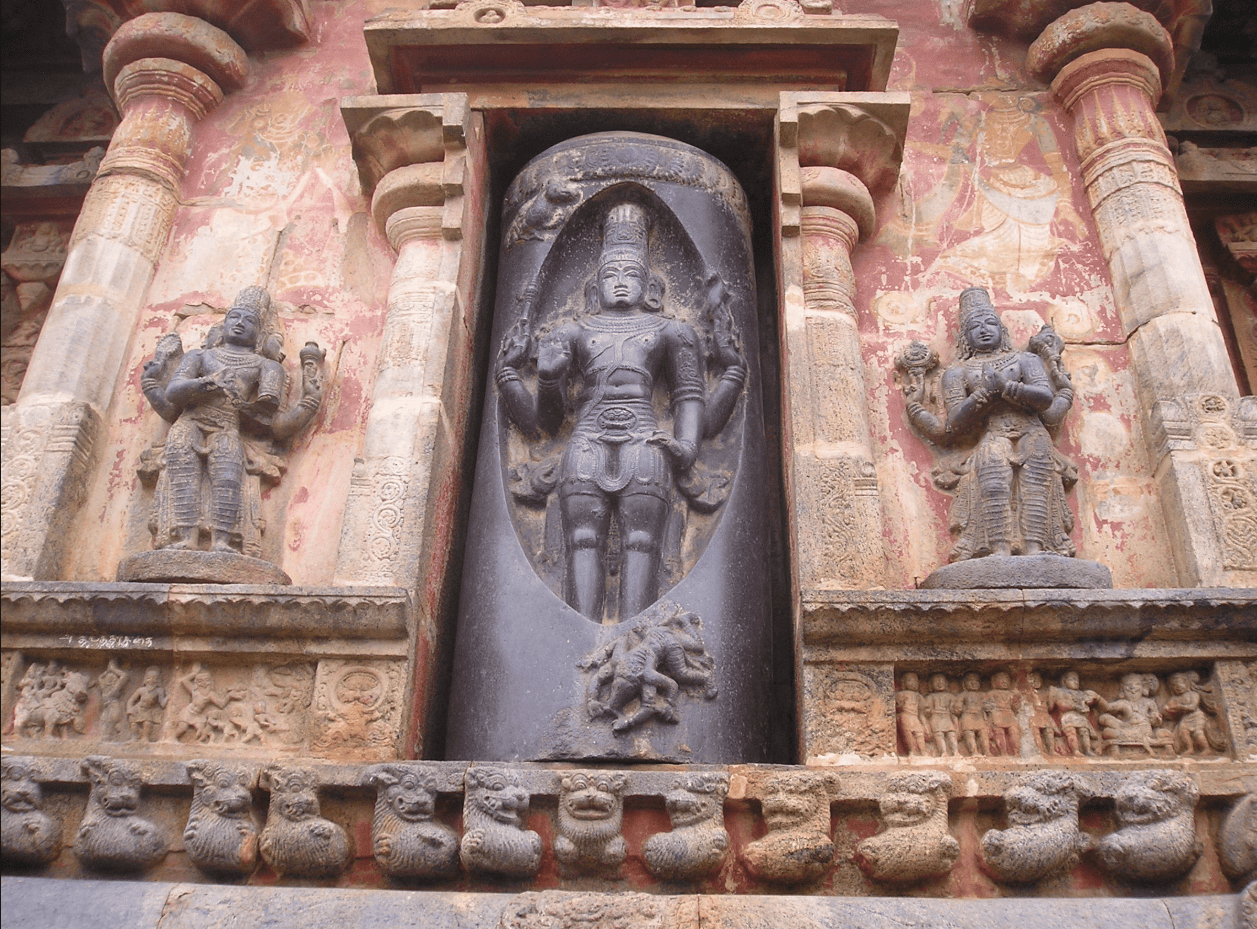
In Hindu mythology, the three main gods form the Trimurti: Brahma the Creator, Vishnu the Preserver, and Shiva the Destroyer. Together, they maintain the balance of the universe. Brahma creates the world, Vishnu protects and sustains it, and Shiva destroys it at the end of a cycle to allow new creation.
These gods work in harmony, but ancient stories tell of a time when pride caused a rivalry between Brahma and Vishnu. This famous tale, known as the Lingodbhava story, comes from texts like the Shiva Purana and Linga Purana. It teaches important lessons about ego, truth, and the infinite nature of the divine.
Article Structure
The Start of the Quarrel
Long ago, Brahma and Vishnu began arguing about who was greater. Brahma said, “I am the creator. Everything starts with me, so I am supreme.” Vishnu replied, “I am the preserver. Without me, your creation would not last. I am greater.”
The argument grew heated. They claimed superiority over each other, and soon it turned into a fierce battle. Other gods watched in fear as the two powerful deities fought.
To stop the destruction, Lord Shiva intervened. He appeared between them as a massive, endless pillar of fire and light called a Lingam. This pillar stretched infinitely upward and downward, with no beginning or end.
Shiva challenged them: “If you want to prove who is greater, find the ends of this pillar. Whoever finds the top or bottom first is supreme.”
The Search for the Ends
Brahma and Vishnu accepted the challenge.
Vishnu transformed into a giant boar (Varaha) and dug deep into the earth to find the bottom of the pillar. He went deeper and deeper for thousands of years, but he could not find the end. Tired and humble, Vishnu admitted defeat and returned. He accepted that the pillar was infinite.
Brahma turned into a swan and flew upward to find the top. He flew for thousands of years but also could not reach the end. Instead of admitting failure, Brahma decided to lie. On his way down, he met a Ketaki flower falling from the top of the pillar. Brahma asked the flower to lie and say that he had reached the top and picked it from there.
When they both returned, Brahma proudly claimed victory, showing the Ketaki flower as proof. Vishnu honestly said he could not find the bottom.
Shiva Reveals the Truth
Shiva knew the truth. The pillar of fire split open, and Shiva appeared in his full form. He praised Vishnu for his honesty and humility. But he was angry with Brahma for lying and with the Ketaki flower for supporting the lie.
Shiva cursed Brahma: “Because you lied, you will not be worshipped widely on earth. Few temples will be built for you.” This explains why there are very few temples dedicated to Brahma today, unlike those for Vishnu and Shiva.
He also cursed the Ketaki flower: “You will not be used in my worship.” That is why Ketaki flowers are not offered to Shiva in prayers.
Both Brahma and Vishnu bowed to Shiva, recognizing his infinite power. The quarrel ended, and peace returned.
Lessons from the Lingodbhava Story
This ancient tale teaches simple but deep truths:
- Pride and ego can cause conflict, even among the greatest beings.
- Honesty is always better than lies, even if it means accepting defeat.
- The divine is infinite and beyond full understanding, no one can claim complete supremacy.
- The three gods are equal parts of one greater reality, working together for the universe.
The Lingam became a sacred symbol of Shiva, representing the endless energy of creation and destruction. Many Shiva temples show this story in carvings called Lingodbhava.
This legend reminds us to stay humble, tell the truth, and respect the balance in life. It shows that true greatness comes from wisdom and sincerity, not from proving superiority.