
Article Structure
Introduction to the Divine Union
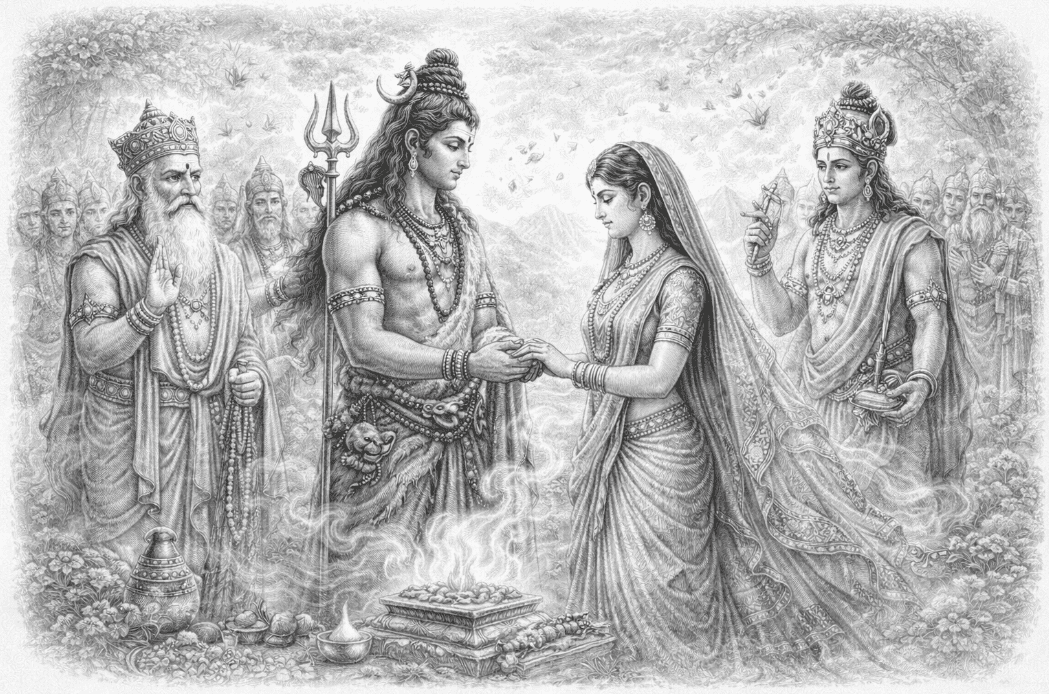
In Hindu mythology, the marriage of Lord Shiva and Goddess Sati stands as a profound event symbolizing the union of pure consciousness (Shiva) with dynamic energy (Shakti). As detailed in major Puranas such as the Shiva Purana, Devi Bhagavata Purana, and Bhagavata Purana, this sacred ceremony occurred after Sati’s intense tapasya and her firm resolve to unite with Shiva despite her father Daksha’s initial opposition. The wedding was not a simple earthly ritual but a cosmic celebration involving deities, auspicious timings, and elaborate rites that ensured harmony in the universe.
This article explores the factual accounts from Puranic sources regarding variations of the swayamvara, the pivotal roles played by Brahma and Vishnu, the selection of propitious astrological timings, and the ceremonial details that marked this divine matrimony. These elements highlight the reverence for Vedic traditions even in celestial unions, offering insights into the sacredness of marriage in Hindu cosmology.
Variations of the Swayamvara in Puranic Narratives
Puranic texts present slight variations in how the marriage unfolded, reflecting different emphases in Shaiva and Shakta traditions. In the Bhagavata Purana, Daksha arranged a swayamvara, a self-choice ceremony, for Sati, inviting gods, kings, and sages while deliberately excluding Shiva to influence her decision toward a more conventional match.
Sati, steadfast in her devotion, entered the assembly hall adorned with celestial decorations. When she did not find Shiva among the suitors, she threw a garland into the air as an act of selection. Miraculously, Shiva manifested, and the garland fell upon him, signifying her choice and completing the union in accordance with swayamvara customs. This dramatic intervention underscored Sati’s agency and the inevitability of their divine pairing.
In contrast, the Shiva Purana describes a more direct process following Sati’s austerities. After Shiva accepted her devotion, Brahma and Vishnu acted as intermediaries. They approached Daksha on Shiva’s behalf to formally propose the marriage. Daksha, though initially reluctant due to Shiva’s ascetic nature, consented under divine persuasion. The ceremony proceeded without a traditional swayamvara, emphasizing mutual acceptance and cosmic necessity over competitive selection.
These variations illustrate the Puranas’ layered storytelling: one highlights Sati’s independent choice, while the other stresses divine orchestration to fulfill the purpose of uniting Shiva and Shakti for universal balance.
The Essential Roles of Brahma and Vishnu – Daksha’s Consent and the Limits of Authority
Brahma, the creator, and Vishnu, the preserver, played crucial facilitative roles in the marriage, as recorded in the Shiva Purana and related accounts. Brahma, recognizing the need for Shakti to draw Shiva from his meditative isolation into worldly engagement, encouraged the union as part of cosmic order. He served as a priest or officiant in some narratives, conducting Vedic rites and ensuring the ceremony adhered to scriptural prescriptions.
Vishnu, often depicted as acting in harmony with Brahma, supported the proposal and mediated between Shiva and Daksha. In certain versions, Vishnu accompanied Shiva’s procession to Daksha’s abode, lending prestige and resolving any lingering hesitations. Their involvement symbolized the Trimurti’s unity: creation and preservation endorsing destruction’s integration through marital bond.
The presence of Brahma and Vishnu elevated the event beyond a familial wedding to a divine alliance, with their blessings invoking prosperity, longevity, and cosmic stability for the couple.
Auspicious Timing and Astrological Alignment
Vedic tradition places great importance on muhurta, the auspicious moment, for ceremonies, and the Shiva-Sati marriage adhered strictly to this principle. The Shiva Purana specifies that the wedding occurred in the bright half (Shukla Paksha) of the Chaitra month (March-April), on the thirteenth day (trayodashi), under the Uttaraphalguni nakshatra, on a Sunday.
This configuration was deemed highly propitious: Chaitra’s association with spring renewal, the waxing moon’s growth symbolism, Uttaraphalguni’s patronage by Aryaman (god of contracts and unions), and Sunday’s rulership by the Sun (symbolizing vitality) all converged to bless the union. Such timing ensured the marriage’s enduring auspiciousness, warding off obstacles and promoting harmony.
Daksha, as a Vedic scholar, selected this alignment joyfully, as noted in the Purana, where he gave his daughter to Shiva “in an auspicious conjunction of stars with the planets in a propitious position.” This detail reinforces the integration of astrology in divine rites, mirroring human practices while elevating them to cosmic scale.
Ceremonial Details and Rituals from the Puranas
The Shiva-Sati marriage ceremony incorporated traditional Vedic elements adapted to its divine context. Preparations included grand decorations: banners, umbrellas, flowers raining from the heavens, and musical performances by Gandharvas. Celestial beings assembled, filling the air with chants and fragrance.
Key rituals included:
- Kanyadana: Daksha formally gave Sati to Shiva, placing her hand in his, symbolizing transfer of responsibility and trust. This act, performed with Vedic mantras, marked parental consent and blessing.
- Panigrahana: Shiva accepted Sati’s hand, signifying mutual commitment. In some depictions, this occurred amid divine witnesses, with Brahma officiating.
- Saptapadi: Though not always detailed explicitly for this union, the circumambulation of the sacred fire (or symbolic steps) represented seven vows for lifelong partnership, common in Vedic weddings.
- Mangala Elements: Auspicious symbols such as turmeric, vermilion, sacred threads, and offerings to the fire (homa) purified the rite. Celestial music, dances, and blessings from assembled deities accompanied these steps.
Shiva arrived in procession from Kailasa, accompanied by ganas, sages, and the Trimurti’s representatives. The event concluded with gifts from Daksha, dowry items befitting a royal union, and communal feasting, though Shiva’s ascetic nature tempered extravagance.
These rituals, drawn from Puranic descriptions, blended Vedic precision with divine splendor, affirming marriage as a sacrament uniting opposites in harmony.
Cosmic Celebrations and Divine Participation
The Shiva Sati wedding transcended earthly bounds, with widespread celebrations across realms. Gods, sages, and celestial musicians participated, creating an atmosphere of joy. Flowers showered from the sky, and divine lights illuminated the venue. The union symbolized the balance of prakriti (nature) and purusha (spirit), essential for creation’s continuity.
Post-ceremony, Sati accompanied Shiva to Kailasa, marking the beginning of their shared life. The event’s grandeur inspired later traditions, influencing depictions in art and festivals.
Spiritual Significance of Sacred Marriage
Beyond literal rites, the marriage carried deep symbolism: Shiva’s acceptance represented consciousness embracing energy, enabling dynamic manifestation. It taught devotion’s power to overcome barriers and the importance of auspicious alignment in life’s milestones.
In Shaiva and Shakta traditions, this union exemplifies ideal partnership, mutual respect, spiritual equality, and cosmic purpose.
Legacy in Hindu Tradition
The Shiva-Sati marriage influences modern practices: elements like muhurta selection, kanyadana, and panigrahana remain central to Hindu weddings. Festivals recalling divine unions, such as Maha Shivaratri (though primarily linked to Shiva-Parvati in some regions), echo this sacred event.
The narrative inspires reflection on devotion, choice, and harmony in relationships.
Conclusion: A Timeless Celebration of Divine Love
The sacred marriage of Shiva and Sati, as narrated in the Puranas, combined swayamvara elements, divine mediation by Brahma and Vishnu, precise astrological timing, and elaborate Vedic rites into a celebration of cosmic significance. This union not only fulfilled Sati’s devotion but also advanced universal order.
Through these factual accounts, the story continues to illuminate the sanctity of marriage as a spiritual sacrament, inviting contemplation on love’s transcendent power.