
Article Structure
Introduction: From Personal Discomfort to Public Defiance
In Puranic mythology, Daksha Prajapati’s conflict with Lord Shiva does not erupt suddenly. It develops gradually, shaped by wounded pride, rigid adherence to ritual authority, and an inability to recognize transcendence beyond social order. Even after Shiva’s marriage to Sati, Daksha’s resentment does not subside. Instead, it matures into a calculated act of exclusion.
Texts such as the Shiva Purana, Bhagavata Purana, and Linga Purana describe how this growing contempt culminates in Daksha’s organization of a grand sacrificial rite, from which Shiva and Sati are deliberately omitted. This omission is not a social oversight. It is a public assertion of ritual supremacy and a direct challenge to Shiva’s place in the cosmic order.
The Seeds of Contempt: Accumulated Grievances
Daksha’s initial discomfort with Shiva is rooted in incompatibility rather than hostility. As a Prajapati, Daksha represents expansion, order, and continuity through ritual and lineage. Shiva represents withdrawal, dissolution, and transcendence beyond structure.
Puranic descriptions emphasize how Shiva’s ascetic life offended Daksha’s sensibilities. His ash-covered body, matted hair, association with cremation grounds, and indifference to wealth and status appeared improper to a figure who equated dignity with ritual purity and visible order. What Shaiva tradition venerates as transcendence, Daksha interprets as disorder.
This difference alone does not create open conflict. It becomes combustible when pride enters the equation.
Pride and Ritual Supremacy: Daksha’s Worldview Hardens
A decisive turning point appears in accounts describing a divine assembly. When Daksha arrives, most beings rise in recognition of his status. Shiva does not. Absorbed in stillness, he neither acknowledges nor rejects Daksha.
The Puranas make it clear that Shiva’s inaction is not intentional disrespect. It is indifference to hierarchy. Daksha, however, interprets it through the lens of wounded authority. The presence of marriage deepens the insult. As a son-in-law, Shiva is now expected to conform.
This moment transforms ideological discomfort into personal grievance. From this point onward, Daksha’s disapproval becomes conscious resentment.
The Decision to Act: Planning the Grand Brihaspatistava Yagya
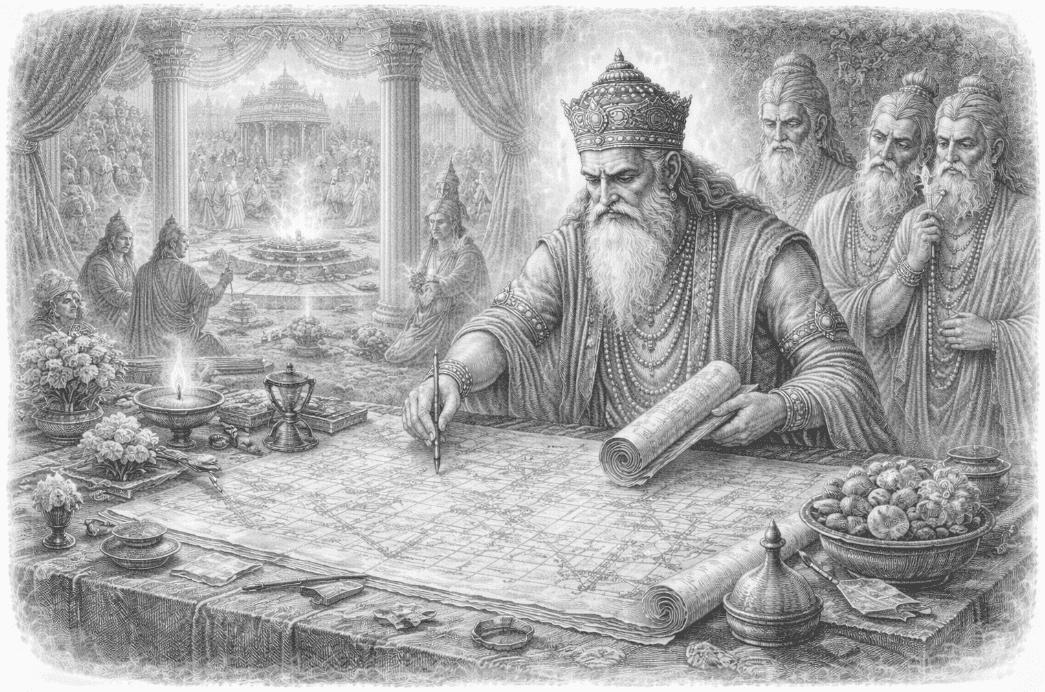
With his contempt reaching a boiling point, Daksha channeled his resentment into action by organizing the Brihaspatistava Yagya, a sacrifice of unparalleled scale. Named in honor of Bṛhaspati (the guru of the gods), this event was intended to celebrate Vedic excellence, invoke blessings for creation, and solidify Daksha’s prestige among the deities. The Shiva Purana describes the preparations as meticulous: invitations were extended to all major gods, sages, and celestial beings, with elaborate arrangements for altars, offerings, and chants.
The decision to exclude Shiva and Sati was deliberate and calculated. Daksha rationalized it as a matter of principle, Shiva’s non-conformity to ritual norms disqualified him from receiving a share in the havi. In practical terms, this meant omitting their names from the invitation list, ensuring no formal summons reached Kailasa. Puranic accounts highlight the irony: while the Yagya aimed to honor the cosmic order, Daksha’s exclusion undermined that very order by ignoring Shiva’s integral role as the destroyer.
The planning phase involved consultations with allies who shared his views, reinforcing his conviction. Daksha’s pride blinded him to potential repercussions, viewing the omission as a rightful assertion of authority. This act marked the culmination of his progressive disdain, transforming private grievances into a public affront.
The Act of Exclusion: What It Meant on the Surface and Symbolically
On the surface, Daksha’s exclusion was a straightforward snub: by not inviting Shiva and Sati, he denied them participation in the ritual, including the divine shares that symbolized inclusion and respect. This omission was not accidental but prominently evident, as the assembly noticed the absence of the destroyer from the Trimūrti. It served as a practical demonstration of Daksha’s control over the event, emphasizing his role as the orchestrator of Vedic order.
Symbolically, the act carried profound implications. In Hindu cosmology, Yagyas represent the interconnectedness of all deities, with each receiving a portion to maintain balance. Excluding Shiva conveyed a message of ritual supremacy, Daksha implied that Vedic sacrifices could function without the transcendent aspect embodied by Shiva. This was a bold challenge to cosmic hierarchy, prioritizing pravṛtti (worldly engagement) over nivṛtti (detachment). The Bhagavata Purana interprets it as an expression of hubris, where Daksha elevated his ego above divine unity.
Furthermore, omitting Sati, his own daughter, symbolized a rejection of her choices and devotion, underscoring the personal dimension of the insult. It represented a broader philosophical stance: pride in material and ritual forms over the formless essence of the divine.
Cosmic Imbalance and Inevitable Consequence
Daksha’s omission sent ripples through the cosmic order, conveying a message that extended beyond the immediate assembly. To the deities and sages, it signaled Daksha’s attempt to redefine authority, placing ritual performance above transcendent reality. Some participants, like the gods who attended, exhibited complicity through silence, while others felt unease, recognizing the imbalance it created.
In deeper terms, the exclusion challenged Shiva’s transcendent status as Mahadeva, the great god who encompasses all. Puranic texts suggest it disrupted the harmony of the Trimūrti, where Brahma’s creation, Viṣnu’s preservation, and Shiva’s destruction must coexist. By asserting ritual supremacy, Daksha inadvertently invited cosmic correction, foreshadowing the upheaval that followed. This act highlighted a key theme in Hindu philosophy: when ego corrupts dharma, it invites divine intervention to restore balance.
The message also resonated symbolically with devotees, illustrating the dangers of external ritual without inner devotion. Daksha’s pride positioned him as a cautionary figure, emphasizing that true order includes transcendence.
Foreshadowing the Tragedy: The Inevitable Collision
Daksha’s escalating contempt and symbolic exclusion set the stage for inevitable conflict. The omission not only humiliated Shiva but also placed Sati in a position of divided loyalty, leading to her fateful decision to attend uninvited. Puranic narratives foreshadow the tragedy through omens, subtle disturbances in the heavens, that Daksha ignored in his arrogance.
This buildup underscores the narrative’s tension: a clash between worldly pride and divine truth. The Yagya, intended as a pinnacle of ritual excellence, became the catalyst for destruction, reminding us of the interconnectedness of all cosmic elements.
Conclusion: When Ritual Forgets Transcendence
Daksha’s rising contempt culminates not in words, but in action. His deliberate exclusion of Shiva from the great yajya represents the moment when ritual authority attempts to eclipse transcendence itself.
Puranic literature presents this as a warning rather than a condemnation of ritual. Sacrifice sustains the world only when guided by humility and recognition of the greater whole. When pride governs devotion, even sacred rites become instruments of imbalance.
Daksha’s story encourages reflection on balancing external duties with inner transcendence, ensuring that devotion remains at the heart of spiritual practice.