
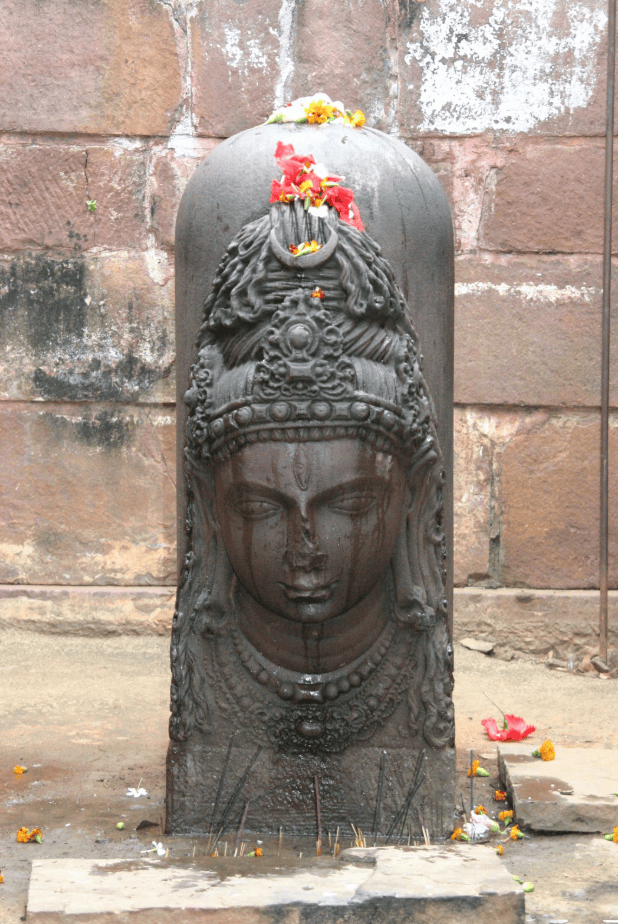
The name Mahadev is one of the most widely used names for Shiva across India today. It appears in temple inscriptions, devotional literature, regional traditions, and everyday speech. Despite its popularity, the origin of this name is often misunderstood. Mahadev did not emerge as a primordial name in the Vedas, nor was it introduced as a standalone deity. It evolved gradually through linguistic usage, philosophical clarification, and devotional emphasis.
The title Mahadev, signifying “Great God” or “God of Gods,” represents one of the most revered epithets of Lord Shiva in Hindu tradition. Derived from Sanskrit roots maha (great) and deva (god), it underscores Shiva’s supreme status among deities. This exploration traces the etymological, scriptural, historical, and theological emergence of “Mahadev,” drawing from Vedic, Upanishadic, Epic, and Puranic sources, while distinguishing it from related names such as Rudra, Shiva, and Sadashiva.
Article Structure
Etymological Foundations
The term “Mahadev” literally translates to the supreme deity, emphasizing transcendence over other gods. Ancient texts employ it to denote Shiva’s unparalleled authority, where lesser deities derive power from him. This etymology reflects Shaiva theology’s assertion of Shiva as the ultimate reality, beyond the Trimurti’s functional roles.
The Vedic Period: Absence of the Name Mahadev
In the Vedas, Shiva appears primarily as Rudra, a fierce yet benevolent deity associated with storms, healing, and protection. The Rigveda invokes Rudra in hymns like 2.33, portraying him as sovereign but not yet explicitly as “Mahadev.”
The Yajurveda’s Shatapatha Brahmana (6.1.3) identifies Rudra’s manifestations in cosmic elements, associating “Mahadeva” with the moon (Chandra), signifying his subtle, luminous aspect. The Taittiriya Samhita and Sri Rudram hymn of the Krishna Yajurveda elevate Rudra with epithets approaching supremacy, laying groundwork for later developments.
Upanishadic Elevation: Mahadev in Philosophical Context
The Shvetashvatara Upanishad, a principal Shaiva text from the late Vedic period, marks a pivotal shift by identifying Rudra-Shiva as the supreme Brahman. Verse 4.10 refers to “Maheshvaram” (Great Lord), a close variant of Mahadev, as the wielder of maya who manifests the universe.
Verses throughout the text repeatedly use “Shiva” as an adjective for the auspicious supreme being, while implying his greatness over all devas. This Upanishad crystallizes the transition from Vedic Rudra to the philosophical Mahadev, portraying him as the eternal, all-pervading Purusha.
Epic Affirmations: Mahabharata’s Explicit Usage
The Mahabharata provides direct attestations of “Mahadev” as Shiva’s title. In the Anushasana Parva (Section 13), Krishna recounts Rudra’s names to Yudhishthira: “The Rishis describe Mahadeva as Agni, Sthanu, and Maheswara; as one-eyed, three-eyed, of universal form, and Shiva.”
Mahabharata and Shiva’s Status
In the Mahabharata, Shiva is repeatedly addressed as:
- The highest deity
- The refuge of gods
- The source of boons even for Vishnu and Brahma
Here, the usage of Mahadev begins to appear more consistently, though still alongside other titles.
This is the stage where Mahadev starts moving from descriptive title to recognized name.
A narrative explains its origin: Devas contribute half their energy to Shiva during a cosmic crisis, rendering him superior, whence he becomes known as Mahadev. This episode underscores his empowerment as the greatest god, worshipped by all deities.
Puranic Elaborations: Supremacy in Shaiva Texts
Puranas, particularly Shaivite ones, extensively employ and justify “Mahadev.” The Shiva Purana lists it among Shiva’s eight primary names (astamurti namani) for worship rituals, as in Vidyesvara Samhita 1.20: Hara, Maheshvara, Shambhu, Pinakadhrik, Shiva, Pashupati, and Mahadeva.
The Linga Purana and Shiva Purana expand the infinite linga myth, where Shiva manifests as boundless light, establishing his superiority over Brahma and Vishnu, earning the title Mahadev. Verses glorify him as the god whom all devas revere, transcending creation.
Cross-sectarian texts like the Bhagavata Purana occasionally apply “Mahadev” broadly, but Shaiva Puranas assert its exclusive primacy for Shiva.
Mahadev vs Rudra, Shiva, and Sadashiva
In Shaivism, nuanced distinctions exist:
- Rudra – Represents the Vedic fierce aspect, often destructive or stormy, evolving into Shiva’s manifested form.
- Shiva – Denotes the auspicious, benevolent quality; post-Vedic, it becomes the primary noun for the deity.
- Sadashiva – The transcendent, five-faced form in Agamic Shaivism, embodying Panchakritya (five acts) and closest to Para Brahman.
- Mahadev – Functions as an epithet emphasizing supremacy, often synonymous with the personal Shiva (Kailasapati) yet highlighting his lordship over devas.
Kashmir Shaivism and Shaiva Siddhanta position Sadashiva as higher ontological level, while Mahadev popularly refers to the gracious, supreme deity accessible through devotion.
Historical and Cultural Emergence
Archaeologically, proto-Shiva figures like the Pashupati seal from Indus Valley (circa 2500 BCE) suggest pre-Vedic roots, amalgamated with Vedic Rudra. By Gupta period (4th-6th century CE), inscriptions and temples dedicate to Mahadev proliferate.
Iconography evolves: Early lingas symbolize the formless, later anthropomorphic forms with attributes affirm Mahadev’s greatness. Temples like Khajuraho’s Kandariya Mahadeva (11th century) exemplify medieval devotion.
By the early medieval period, temple inscriptions frequently refer to Shiva as Mahadev.
This is significant because inscriptions reflect popular and institutional usage, not just elite texts.
Mahadev had become:
- A public-facing name
- A devotional identifier
- A cultural constant
Mahadeva Philosophical and Devotional Significance
The name Mahadev aligns with several core Shaiva ideas:
- Shiva is Anadi, without beginning
- Shiva is beyond time
- Shiva is not subordinate to cosmic processes
A supreme title fits a non-dependent principle. The emergence of “Mahadev” reflects Hinduism’s syncretic development: Vedic Rudra’s integration with non-Vedic ascetic traditions yields a supreme deity. Philosophically, in Advaita and Shaiva schools, it signifies Brahman; devotionally, it inspires bhakti as the compassionate God of Gods.
Narratives where devas worship Shiva reinforce hierarchical monotheism within polytheism. Mantras like “Om Namah Shivaya” implicitly invoke Mahadev’s grace.
In conclusion, “Mahadev” emerges from Vedic seeds through Upanishadic philosophy, Epic narratives, and Puranic glorification, crystallizing Shiva’s status as the eternal supreme. This title encapsulates Hinduism’s profound recognition of divine transcendence and immanence, inviting eternal reverence.