
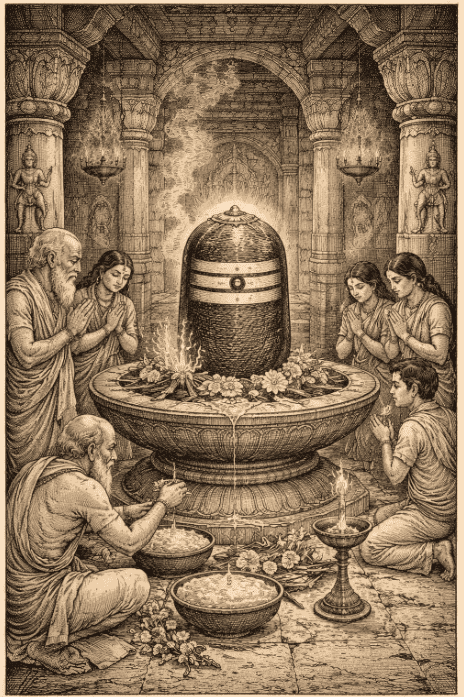
Lord Shiva, revered as Mahadev, the Great God, presents a striking visual in Hindu iconography: his body is smeared with sacred ash, known as vibhuti or bhasma. Unlike other deities adorned with gold, jewels, silks, or sandalwood paste, Shiva chooses this simple, gray substance as his primary ornament. He is often called Vibhuti Bhushan (the one adorned with ash), highlighting how this element defines his divine form.
This choice is deliberate and laden with meaning. Vibhuti represents ultimate reality, the dissolution of ego, the acceptance of mortality, and purity achieved through renunciation. It stands in sharp contrast to material wealth, which symbolizes attachment, illusion, and transient glory. While gold and ornaments signify worldly success and sensory pleasure, ash reminds one of the final state of all physical forms. This article examines why Shiva adorns himself with vibhuti rather than gold or ornaments, drawing from scriptural sources such as the Shiva Purana, Upanishads like the Kalagni Rudra Upanishad, and philosophical teachings in Shaivism. It explores the symbolism, preparation, application, and spiritual implications of this sacred ash.
Article Structure
The Nature and Preparation of Vibhuti
Vibhuti is not ordinary ash. It is sacred substance produced through consecrated processes. Traditionally, it derives from burnt dried wood in Vedic fire rituals (homa or yajna), or from specially prepared cow dung mixed with other materials and burned in a controlled manner. The Shiva Purana describes detailed methods for its creation, including the recitation of mantras during burning to infuse it with spiritual potency. Once prepared, vibhuti is finely powdered and stored for ritual use.
In Shaivism, vibhuti holds multiple layers of significance. The term itself derives from Sanskrit roots implying “glorious form” or “supreme power” (vibhu meaning all-pervading or eminent). It contrasts with material opulence, as it embodies the residue after complete combustion, when name, form, and identity are burned away, leaving only essence.
Scriptures emphasize that vibhuti purifies the wearer. The Shiva Purana states that applying it elevates the devotee, renders actions fruitful, and invites Shiva’s grace. Works performed without vibhuti are considered fruitless in certain contexts, underscoring its role in spiritual discipline.
Why Ash Instead of Gold: The Contrast with Material Wealth
Gold and ornaments represent accumulation, beauty, status, and sensory enjoyment. In Hindu culture, deities like Lakshmi or Kubera are associated with wealth symbols, signifying prosperity and abundance. Shiva, however, rejects such adornments to illustrate detachment from maya, the illusory world of appearances.
Ash, by contrast, is the end product of destruction by fire. Everything, plants, animals, humans, reduces to ash when burned. This universality conveys a profound truth: the body, no matter how adorned or powerful in life, returns to dust. Shiva’s ash-smeared form serves as a living reminder of this impermanence. By choosing vibhuti over gold, he demonstrates that true glory lies not in external embellishments but in realization of the eternal self beyond the physical.
Philosophically, this choice aligns with Shaiva teachings on ego dissolution. The ego (ahamkara) identifies with possessions, achievements, and appearances. Gold reinforces this identification; ash dissolves it. When Shiva smears vibhuti, he embodies the burning away of ego, revealing the pure consciousness underneath. Devotees emulate this by applying vibhuti, cultivating vairagya (detachment) and focusing on inner purity rather than outer display.
One key scriptural insight comes from Vedic statements: an unmarked forehead is likened to a cremation ground, empty and devoid of sanctity. Applying vibhuti transforms it into a sacred space, affirming life’s transient nature while invoking divine presence.
Ash as a Symbol of Ego Dissolution
Shiva’s use of vibhuti carries multifaceted symbolism.
First, it signifies mastery over death and the cycle of existence. As the destroyer in the Trimurti, Shiva facilitates dissolution necessary for renewal. His ash-covered body reflects this cosmic role: just as fire reduces forms to ash for new creation, Shiva’s presence enables transcendence of mortality.
Second, vibhuti represents purity through renunciation. Gold attracts desire and attachment; ash repels them. By adorning himself thus, Shiva exemplifies the ascetic ideal, simplicity, austerity, and freedom from worldly bonds. This renunciation grants supreme spiritual authority, as detachment from material concerns allows unhindered insight into reality.
Third, it symbolizes ego dissolution and the burning of ignorance. A famous narrative illustrates this: when Kamadeva (the god of desire) attempted to disturb Shiva’s meditation, Shiva opened his third eye and reduced him to ashes. From that moment, vibhuti became a mark of victory over desire and illusion. Shiva’s ash-smeared form commemorates this triumph, reminding devotees that true knowledge incinerates ignorance.
Additionally, vibhuti connects to the three gunas (sattva, rajas, tamas) governing material nature. In some interpretations, the ash signifies transcendence beyond these qualities, aligning with Shiva’s role as the supreme yogi.
The Tripundra: Application and Its Profound Meaning
Devotees apply vibhuti as tripundra, three horizontal lines across the forehead, often extending to other body parts. The Shiva Purana details this practice, associating each line with cosmic principles.
- The first line represents the destruction of ego (ahamkara).
- The second symbolizes the burning of karma (accumulated actions binding the soul).
- The third signifies the dissolution of maya (the veil of illusion).
Together, tripundra liberates the wearer, preparing the mind for higher awareness. Applied at the ajna chakra (between the eyebrows), it awakens intuition and connects to Shiva’s third eye.
Scriptures prescribe mantras during application, such as those from the Kalagni Rudra Upanishad, which explain tripundra as representing Vedic fires, the syllables of AUM, the three worlds, or aspects of Shiva. Particles clinging to the skin are considered miniature lingams, symbols of divine presence.
This practice is not limited to ascetics; householders apply vibhuti daily as a mark of devotion, protection, and mindfulness.
Vibhuti Spiritual Significance and Daily Practice
Wearing vibhuti offers several benefits according to tradition.
It purifies the soul, wards off negative energies, and acts as a shield against inauspicious influences. The Shiva Purana asserts that it elevates the devotee, destroys sins, and ensures auspicious outcomes.
On a practical level, vibhuti serves as a constant reminder of mortality, encouraging ethical living and spiritual focus. In moments of temptation or pride, the sight of ash prompts reflection: all external achievements end in the same residue.
It fosters humility and equality, kings and beggars alike reduce to ash, dissolving social hierarchies in the face of ultimate truth.
In yogic terms, vibhuti aids energy control and meditation, aligning the practitioner with Shiva’s essence.
Relevance in Contemporary Practice
Today, vibhuti remains integral to Shaiva worship. Devotees receive it as prasad from temples after rituals, applying it with reverence. Modern seekers value its message amid materialism: prioritize inner wealth over external possessions.
Reflecting on Shiva’s choice encourages detachment without rejecting the world, engage fully, yet remain unbound. Vibhuti teaches that renunciation is not deprivation but liberation from false identifications.
Ash Represents Liberation in Shaiva Thought
Lord Shiva adorns his body with vibhuti, not gold or ornaments, because ash embodies the profound truths of impermanence, ego dissolution, purity through renunciation, and ultimate reality. While material wealth binds one to illusion and transience, sacred ash liberates by reminding of the eternal beyond form.
Scriptures like the Shiva Purana exalt this practice, portraying vibhuti as a source of grace, protection, and spiritual elevation. By choosing ash, Shiva exemplifies the path of the wise: embrace simplicity, confront mortality, dissolve the ego, and realize the self as unchanging consciousness.
For devotees, applying vibhuti is an act of profound devotion, an emulation of Mahadev that invites his transformative power. In this humble mark lies the promise of freedom: from attachment, from fear, from illusion, toward the glorious, all-pervading truth that Shiva himself represents.